

In 2026 the pace of change and Ai kept rising, and leaders found that the human side of the job mattered more because of it. Engagement fell, managers carried too much, and the leaders who did best stayed honest and curious with their people. This post covers what the data shows, what six of ourour six Partners saw on the front line of leadership development and executive coaching, and what they see leaders will need to do differently in 2027.
What did leadership look like in 2026?
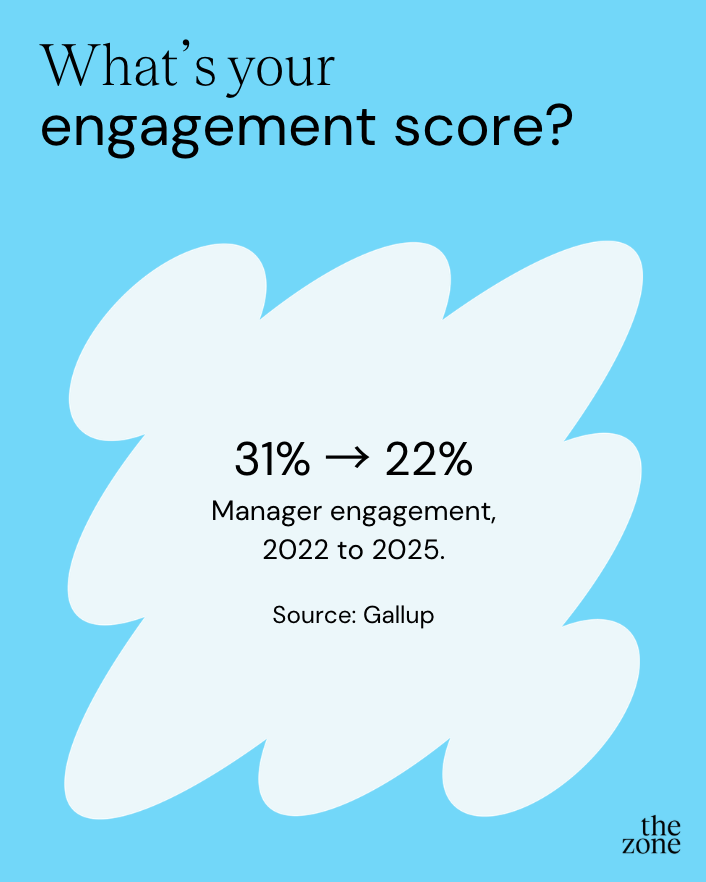
The numbers are uncomfortable. Gallup’s 2026 State of the Global Workplace report found that global employee engagement fell to 20% in 2025, its lowest level since 2020. The people in the middle took the biggest hit. Manager engagement has dropped nine points since 2022, from 31% to 22%. gallup
That matters because managers set the tone for everyone around them. Gallup’s research across 2.5 million teams shows that managers account for at least 70% of the variance in engagement scores across business units. happeo
Leaders are also carrying more than they let on. Compared with individual contributors, leaders report higher stress, anger, sadness and loneliness, with loneliness 10 points higher. flexos
What our Partners saw on the front line
The Zone’s Partners coach executives and facilitate teams every week, and they see what never shows up in a survey. As the pace of change and Ai rise, the common thread is that the human side of leadership matters more than ever.
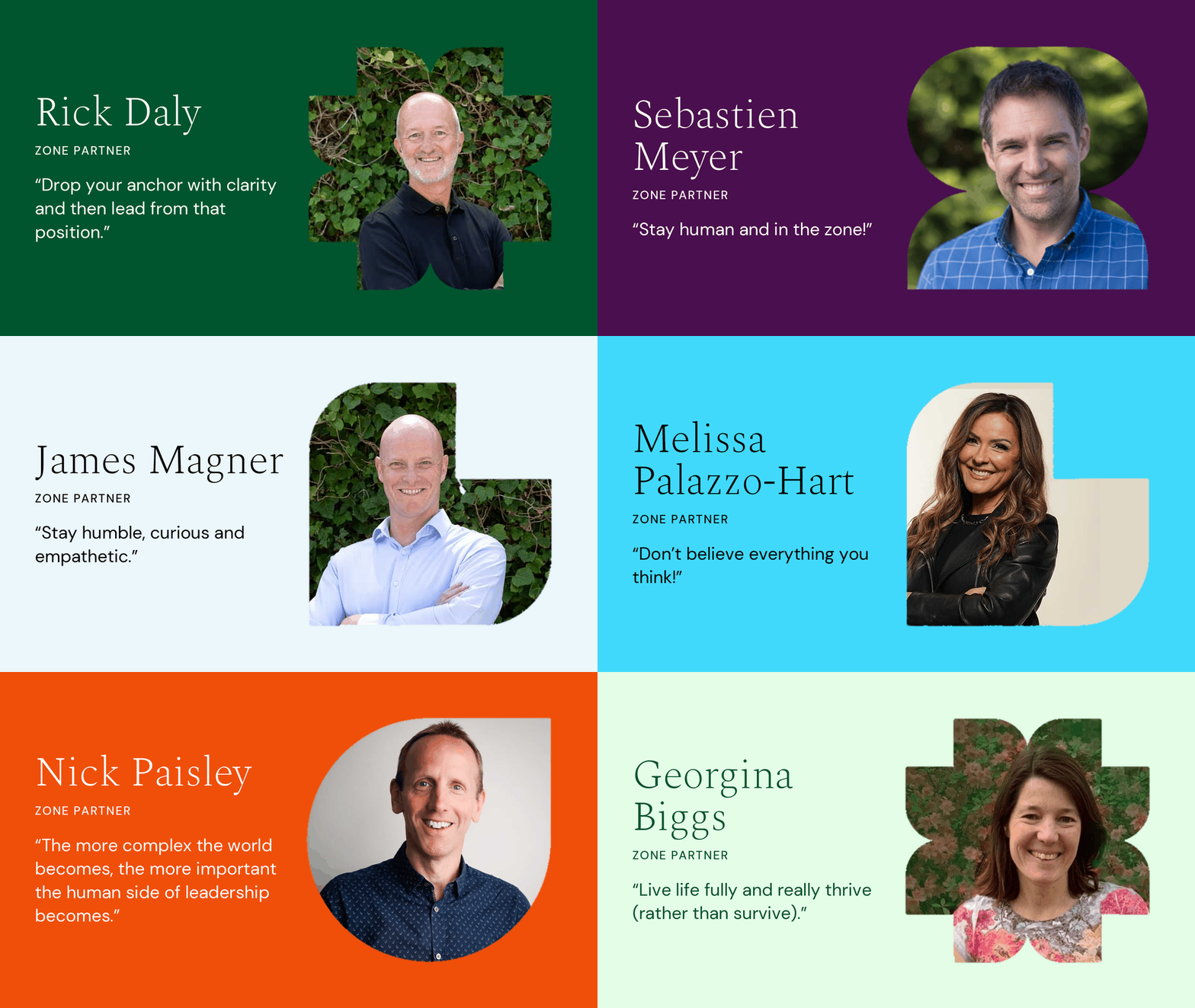
Rick Daly, Zone Partner, UK: Behaviors have consequences
“Around half of my coachees are led by trusting, empowering leaders, and the other half are being micromanaged and directed. In every case their boss is the CEO. There’s no right or wrong leadership style, and we’ve all needed to be more directive at times. But behaviors have consequences. People led by collaborative leaders feel confident, trusted and motivated. People who are controlled tend to shrink into themselves and wait for the next instruction. They don’t feel trusted to make decisions or even to speak up. What a waste of collective intelligence, and what damage to young, talented people. Eventually those stars move on, and the directive leader is left with a team that can only work under direct guidance.”
Rick’s advice: make an intentional choice about the kind of leader you want to be. Adjust for people and circumstances, but drop your anchor with clarity and lead from there.
Nick Paisley, Zone Partner, Switzerland: the answers rarely sit with one person
“There’s no shortage of challenges facing leaders right now, and the pace of change isn’t slowing. What struck me this year is that the answers rarely sit with one individual. The ability to cut through the noise, focus on what matters and bring people together around shared priorities is becoming more important. The more complex the world gets, the more important the human side of leadership becomes. How we connect, collaborate and bring out the best in each other will be the point of difference.”
Sebastien Meyer, Zone Partner, US: More meetings, less connection
“The explosion of meetings continues, and there’s still a gap in connection. People are so overwhelmed by meetings that they multitask during them to catch up, but because they aren’t present, the meetings don’t produce the results they were meant to. People feel disconnected, so they schedule more meetings. It’s a downward spiral.”
Building high-performance teams starts with fixing this. Fewer, better meetings, where people are fully present, give teams their energy back.
Melissa Palazzo-Hart, Zone Partner, US: We react to the stories we make up
“What I’ve noticed this year is how overwhelmed people are. There’s so much change and so many unknowns, and when we don’t know what’s coming, our minds fill in the blanks, usually with the worst case. I see this even in the most brilliant, accomplished leaders. We make up stories about what might happen and then react to them as if they were facts. When we’re overwhelmed, it’s harder to listen, to connect and to see the bigger picture.”
Melissa’s opportunity for leaders: slow down enough to question your own thinking, get curious before jumping to conclusions, and create the space to hear the wisdom in the people around you.
Melissa’s wins this year. Six of Melissa’s executive coaching clients received significant promotions, and some now lead entire organizations. “Watching someone step into their potential and accomplish things they once thought were out of reach is just incredible.” You can read more client stories on our success stories page.
James Magner, Zone Partner, UK: The challenges were people challenges
“Human-centric capabilities remain at the front of leaders’ development needs. While there are underlying concerns about leading alongside Ai, most of the challenges leaders and teams faced through 2026 were people related.
As coaches we often assume senior leaders are getting the basics right with their teams. At times they aren’t, especially under pressure in a fast, complex world. That builds the business case for taking a breath, slowing down and deciding what one thing to say yes to in each moment.”
Georgina Biggs, Zone Partner, UK: Courage, integrity and time for connection
“Leaders want the courage to lead with true integrity and sound ethics, and to learn how to use Ai to free up time and space for deeper human connection and genuine creativity.”
The pattern behind what our Partners saw
Several of these observations match the research. Overwhelmed people stop telling the truth. In a 2026 Hubstaff survey, 55% of employees said they had told a manager they were fine while actually feeling overwhelmed. UK research found a similar pattern, with 65% of staff avoiding open conversations about workload and burnout over the past six months. The controlled team Rick describes and the stories Melissa describes lead to the same place, where people say “fine” and keep the real answer to themselves.
What is Ai doing to leadership?
Ai sped up the work in 2026 and left the hardest parts of leading exactly where they were. A 2026 survey of senior data and Ai leaders found that 93% named culture and change management as the main barriers to implementing Ai. That is why lasting culture change now sits at the center of every Ai conversation.
The payoff has also been slower than the hype suggested. In Gallup’s data, as many as 89% of leaders reported no impact of Ai on company productivity over the last three years, though they expect a small gain over the next three. Rick puts the opportunity and the risk in the same breath: the benefits of Ai are enormous and the risks are equally so, which is why he hopes leaders protect their emotional intelligence with the same passion they bring to learning the technology.

What will leadership look like in 2027?
These are our predictions, and we’re happy to be argued with.
Leaders will choose their style on purpose
Rick’s coachees show how much a leader’s default style shapes a team. The leaders who pull ahead in 2027 will decide what kind of leader they want to be, tell their teams, and flex around that anchor when circumstances call for it.
Leaders will make it safe to speak up
Sebastien’s advice on feedback applies to every conversation. When something looks wrong or less than ideal, resist the urge to correct it. Get curious and ask questions, and make it safe for the team to explore it with you. Teams often come up with something better than what you had in mind.
Manager support will become a priority
The data says this is fixable. Gallup found that manager training lifts thriving from 28% to 34%, and ongoing encouragement and development takes it to 50%. The best organizations show what’s possible, with 79% of managers in best-practice organizations engaged, nearly four times the global average. Strong leadership development is how organizations close that gap.
Ai fluency will matter, and human skills will decide who leads well
Judgment, trust and honest conversation are the things Ai can’t do for you. Georgina’s wish for leaders is to use Ai to free up time, then spend that time on connection and creativity. Leaders who do that will pull ahead.
Leaders will slow down to decide what matters
James’s one-yes-at-a-time approach and Nick’s focus on shared priorities point the same way. In a year with more noise, the leaders who say yes to one thing at a time will outperform the ones who say yes to everything.
What our Partners wish for you in 2027
Rick - I hope we embrace the dramatic change Ai is bringing while keeping humanity at the center of how we lead employees and relate to customers. We need to maintain our emotional intelligence with equal passion, and succeed with a wonderful balance that creates the collective wisdom we need to thrive as human beings.”
Nick - I wish for more happiness and more success, in whatever form that means to everyone.
Sebastien - My wish is short: stay human and in ‘the zone’.
Melissa - I hope you appreciate how far you’ve come. “We’re so often on the treadmill of what’s next. Pause. Look back at everything you’ve navigated, learned and created, even the hard stuff, and thank yourself too. My wish for 2027 is more joy, more connection, more gratitude and a lot more appreciation for the journey, not just the destination.”
James - I hope you stay humble, curious and empathetic.
Georgina - I hope you live fully and thrive, finding joy in simple pleasures, authenticity and small moments of happiness and health.
Executive coaching tips from our Partners
Here are six tips from our executive coaching Partners to take into the new year.
Nick: separate the problem from your view of it
Next time something feels overwhelming, ask yourself how much of it is the problem itself and how much is the way you’re choosing to see it. You may not be able to change the situation, but you can often change your perspective, your response and what you do next.
Sebastien: get curious instead of correcting
Feedback is crucial for growth, and it can easily land as criticism. When you see something that looks incorrect or not optimal, resist the temptation to fix it. Ask questions, direct the team’s attention to the area and explore it together.
Melissa: don’t believe everything you think
When you catch yourself thinking “I can’t do that” or “What if everything goes wrong?”, ask whether it’s actually true. Then ask what else might be possible. “Doubt your doubts. You might just surprise yourself.”
James: use two quick questions
Ask yourself what three things you’re grateful for today. Then ask what you’re going to start, continue and stop doing to reach your goal.
Georgina: keep it simple
Take one step at a time, stay open to all possibilities, don’t judge, and actively look for things to be grateful for.
Rick: drop your anchor
Think hard about your leadership style and choose it on purpose. Adjust for people and circumstances, and lead from a clear position.

How to get ready for 2027
Start with three questions over the break. What are you hearing as “fine” that isn’t? Who is supporting your managers, and who is supporting you? Where will Ai give you time back, and what will you do with it?
You don’t have to answer them alone. Book a free 15-minute Strategy Call to talk through where you are, or explore our Reboot online course to start building the habits now. If you’re planning a company event, our keynote speaker offering can bring these ideas to your whole organization.
Get ahead of 2027 and lead in 'the zone'
In January we’re launching Lead in the Zone 2027, our personalized leadership package built to help you and your team lead through everything above. Spots are limited, and the people on the waitlist get first access before it opens to everyone.
Join the waitlist for first access >
Frequently asked questions
What are the biggest leadership trends for 2027?
We expect intentional leadership styles, honest conversation, stronger support for managers, Ai fluency paired with human skills, and leaders who slow down to focus on what matters.
Why does manager engagement matter?
Gallup finds managers account for at least 70% of the variance in team engagement, so when managers struggle, their teams usually do too.
How can leaders prepare for 2027?
Choose your leadership style on purpose, make it safe for people to tell you the truth, invest in leadership development for your managers, use Ai to free up time for people, and build your own support network.
What is Lead in the Zone 2027?
It’s The Zone’s personalized leadership package for leaders and teams, launching in January with limited spots. Join the waitlist for first access.
Next Post



























Let's work together
Our diverse global team can help you reimagine the future of your teams, leaders and organization. Get in touch.
Book your free 15-minute Clarity Call
Identify your key challenges
Explore tailored solution options
Show you how The Zone can accelerate your success
Take the first step toward real progress—schedule your call today.


