

Why Emotionally Intelligent Leaders Struggle Most in Toxic Workplace Cultures
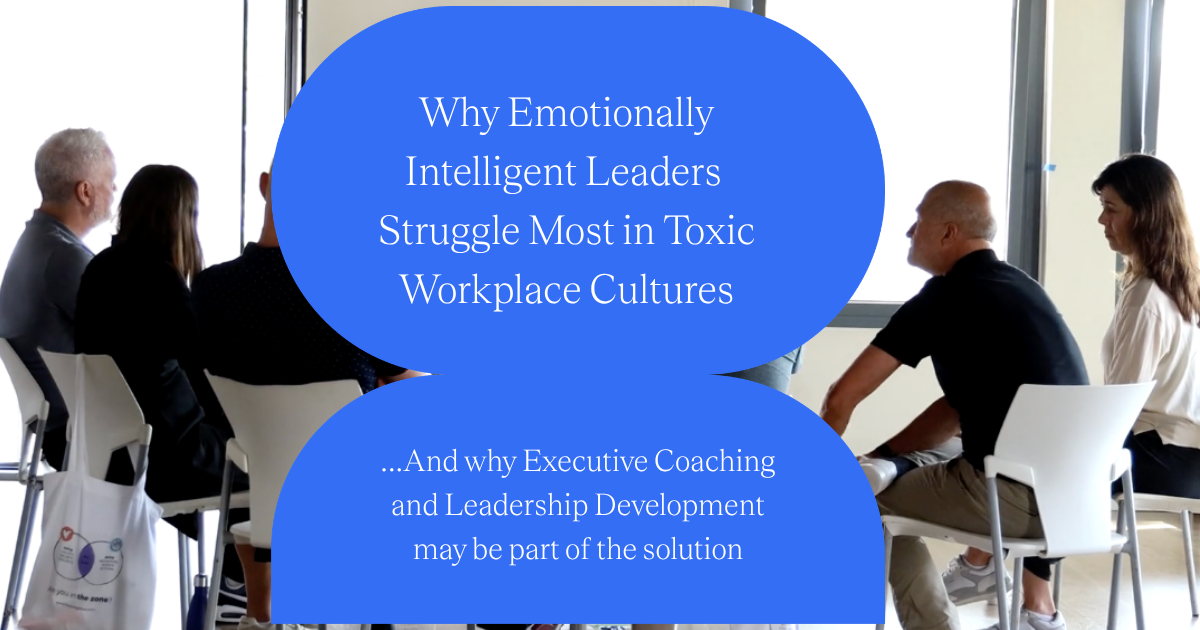
And why Executive Coaching and Leadership Development may be part of the solution
I've worked with a lot of leaders over the years, and one thing I've noticed is that the people who often feel the most pain in a dysfunctional organization aren't necessarily the least resilient. Sometimes they're the most emotionally intelligent people in the room. They notice things. They notice when the energy changes in a meeting, when someone stops speaking up, when a leader says they want honesty but doesn't really want to hear it, or when a team says everything is fine but you can feel that it isn't.
Because they notice it, they often end up trying to fix it. They become the person people come to when there's conflict. They smooth things over, check in on people, have the difficult conversations, and carry the stuff that nobody else wants to carry. For a while, that can look like great leadership. But there is a difference between being a strong leader and becoming the emotional shock absorber for a dysfunctional organization. Eventually, something has to give.
Emotional Intelligence Doesn't Make You Immune to Bad Leadership
We sometimes talk about emotional intelligence as if it is a superpower that allows people to handle anything. It isn't. Emotional intelligence can help a leader understand people, navigate complexity, manage relationships, and make better decisions, but it doesn't make someone immune to the effects of a toxic workplace culture.
In fact, being highly aware of what is happening around you can make it harder to ignore dysfunction. You see the passive-aggressive behavior, the politics, the leader who creates fear and then wonders why nobody speaks up, and the difference between the values on the wall and the behavior in the room. Once you see it, you can't really unsee it.
That's where things get interesting. The person who is described as "too sensitive" may actually be the person who is paying the most attention. The question isn't always, "Why can't they handle it?" Sometimes the better question is, "What are they seeing?"
Research into unhealthy workplace environments has demonstrated the significant impact that toxic cultures can have on employees. The American Psychological Association has highlighted the connection between toxic workplaces, stress, fear, employee well-being, and intentions to leave, while emphasizing the importance of creating workplaces where people feel respected and psychologically safe.
The People Holding the Culture Together May Be Carrying Too Much
One of the things I love about working with leaders is that you get to see behind the curtain. You see the strategy, the numbers, and the ambition, but you also see the relationships. You see what's really happening in the leadership team. Very often, the issue isn't the strategy. It's the leadership.
I've seen highly intelligent people spend enormous amounts of energy trying to compensate for a leader who doesn't listen. I've seen talented teams become exhausted because nobody is prepared to have the conversation that needs to be had. I've seen organizations talk about psychological safety while people are quietly learning that there are certain things you simply don't say around the boss. I've also seen emotionally intelligent people become the unofficial repair system. They carry the conflict, they carry the relationships, and they carry the company culture until eventually they can't.
That's not sustainable leadership, and it certainly isn't high performance. When organizations repeatedly rely on emotionally intelligent employees to absorb the consequences of poor leadership, they risk placing an unsustainable emotional burden on those individuals. When those people eventually disengage, burn out, or leave, the organization may ask why they weren't resilient enough. That's often the wrong question. The more useful question is whether the organization has allowed its most emotionally intelligent people to become the unofficial repair system for problems leadership has failed to address.
Toxic Cultures Don't Usually Look Toxic From the Inside
This is one of the tricky things about organizational culture. Nobody normally walks into work and says, "Great, we're building a toxic culture today." It happens much more subtly. It happens when a leader consistently interrupts people, when the highest performer gets away with behavior that everyone else would be held accountable for, or when people learn that challenging the boss has consequences.
It happens when leaders say they want feedback but only want the comfortable version. It happens when people stop telling the truth because telling the truth has become too expensive. Then someone says, "We need our people to be more resilient." Really? Or do we need our leaders to be better? That's a very different conversation.
High performance and healthy leadership are not competing priorities. The strongest organizations understand that sustainable performance depends on the quality of leadership and the environment leaders create. A genuinely high-performing organization should not require people to live in fear, suppress disagreement, or repeatedly recover from the behavior of their leaders.
Culture is What You Allow
I've spent a lot of time thinking about culture over the years, and I've come to believe that culture isn't what you say. It's what you consistently allow. You can have beautiful values written on the wall, a great purpose statement, and an employee engagement survey where everyone talks about psychological safety. But watch what happens when someone makes a mistake. Watch what happens when someone challenges the CEO. Watch what happens when your biggest revenue generator behaves badly. That's where your culture is.
The American Psychological Association has highlighted the significant impact toxic workplace environments can have on employees, including stress, fear, employee well-being, and intentions to leave. It also points to the importance of creating workplaces where people feel respected and psychologically safe.
Culture isn't a nice-to-have. It is an operating system, and leadership is one of the biggest things shaping it. If emotionally intelligent employees are quietly disengaging or leaving, organizations should stop focusing exclusively on what might be wrong with those individuals. They should also consider what those people may be seeing that others are choosing to ignore.
This is Where Executive Coaching Gets Interesting
Executive Coaching isn't about taking a good leader and giving them another leadership model to remember. At least it shouldn't be. The more interesting question is what happens when a leader gets honest about the impact they're having.
Most leaders don't set out to create dysfunctional cultures. They have good intentions, they're trying to deliver results, they're under pressure, and they're moving quickly. Sometimes, without realizing it, they become part of the problem. A leader might think they're being decisive when the team experiences them as controlling. They might think they're being direct when people experience them as intimidating. They might think they're giving people autonomy when the team actually feels abandoned. They might think they're challenging people to perform when they're actually creating fear.
That's the gap between intention and impact, and it's one of the most important gaps a leader can close. Research into Executive Coaching has found evidence for positive outcomes across areas including leadership development, self-awareness, and workplace behavior, while also highlighting the importance of context and the quality of the coaching relationship.
A systematic review published in The Leadership Quarterly examined research into Executive Coaching outcomes and highlighted the importance of both the coaching process and the organizational context in shaping outcomes. A separate systematic review published in PLOS ONE examined executive, leadership, and business coaching and concluded that coaching can be an effective developmental intervention within organizations, while also highlighting the need for rigorous research and appropriate context.
For me, that's where good Executive Coaching earns its place. It's not about fixing broken people. It's about helping leaders see themselves more clearly. Sometimes the biggest thing standing between a leader and better performance isn't a lack of knowledge. It's a lack of awareness.
Leadership Development Should Make You Look in the Mirror
We often make Leadership Development far too comfortable. We give people frameworks, teach them communication techniques, and talk about delegation, feedback, and performance management. All useful stuff, but leadership isn't a checklist. At some point, you've got to look in the mirror.
How do I show up when I'm under pressure? What happens to me when someone disagrees with me? What do I do when I'm wrong? What am I avoiding? Where does my ego get in the way? What do people experience when I walk into the room? And perhaps the biggest question of all: am I creating the kind of environment I would actually want to work in?
That's where Leadership Development becomes transformational rather than transactional. The goal isn't to create leaders who know more leadership theory. It's to create leaders who are more aware of themselves, more capable of making good choices, and more intentional about the impact they have on other people.
Your Strength Can Become Your Kryptonite
This is something I talk about a lot with leaders. Your strengths can become your weaknesses when you overplay them. The decisive leader can become controlling. The passionate leader can become overwhelming. The high-standard leader can become impossible to please. The empathetic leader can avoid difficult conversations. The visionary leader can become disconnected from execution. And the emotionally intelligent leader can become the person who carries everyone else's emotional baggage.
Your superpower can become your kryptonite. The answer isn't to get rid of the strength. It's to become conscious of when you're overusing it. That's a big part of what great coaching and Leadership Development should help you do. It helps leaders understand not only what they are naturally good at, but also when those strengths may be creating unintended consequences for the people around them.
Stop Asking Your Best People to Tolerate What You Refuse to Change
If your emotionally intelligent people are exhausted, don't immediately ask them to become more resilient. Look at what's exhausting them. If your best people are leaving, don't automatically blame the market, the economy, Gen Z, or the latest workplace trend. Look at the environment you're creating.
If people aren't speaking up, don't assume they have nothing to say. Ask whether you've created an environment where they feel safe saying it. If someone keeps telling you there is a problem, don't make the person the problem simply because they're inconvenient. Sometimes they're giving you the most valuable information you have.
The strongest leaders I've worked with aren't the ones who think they have all the answers. They're the ones who are willing to look, really look, at themselves, their teams, their culture, and the gap between what they think is happening and what is actually happening.
The Question I'd Ask Your Leadership Team
If I walked into your organization tomorrow and asked your people one question, what would they tell me? Not what would they tell HR and not what would they tell you in the leadership meeting, but what would they tell someone they trusted?
Would they say they feel heard? Would they say they can challenge ideas? Would they say the leadership team walks the talk? Would they say the culture gives them energy or takes it away? And perhaps the most revealing question is whether your best people would recommend working for you.
That's a pretty good culture test. Ultimately, leadership isn't about what you say about yourself. It's about the experience other people have of you.
Great Leadership is About Impact
I don't believe leadership is about being liked. It's about impact. It's about the choices you make, the relationships you build, and the environment you create around you. That's why I believe Executive Coaching and Leadership Development matter.
Not because leaders need to become perfect. They don't. I've certainly made enough mistakes myself to know that perfection isn't the goal. The goal is awareness. The goal is choice. The goal is becoming better at recognizing when your behavior is helping and when it's getting in the way, and then having the courage to do something about it.
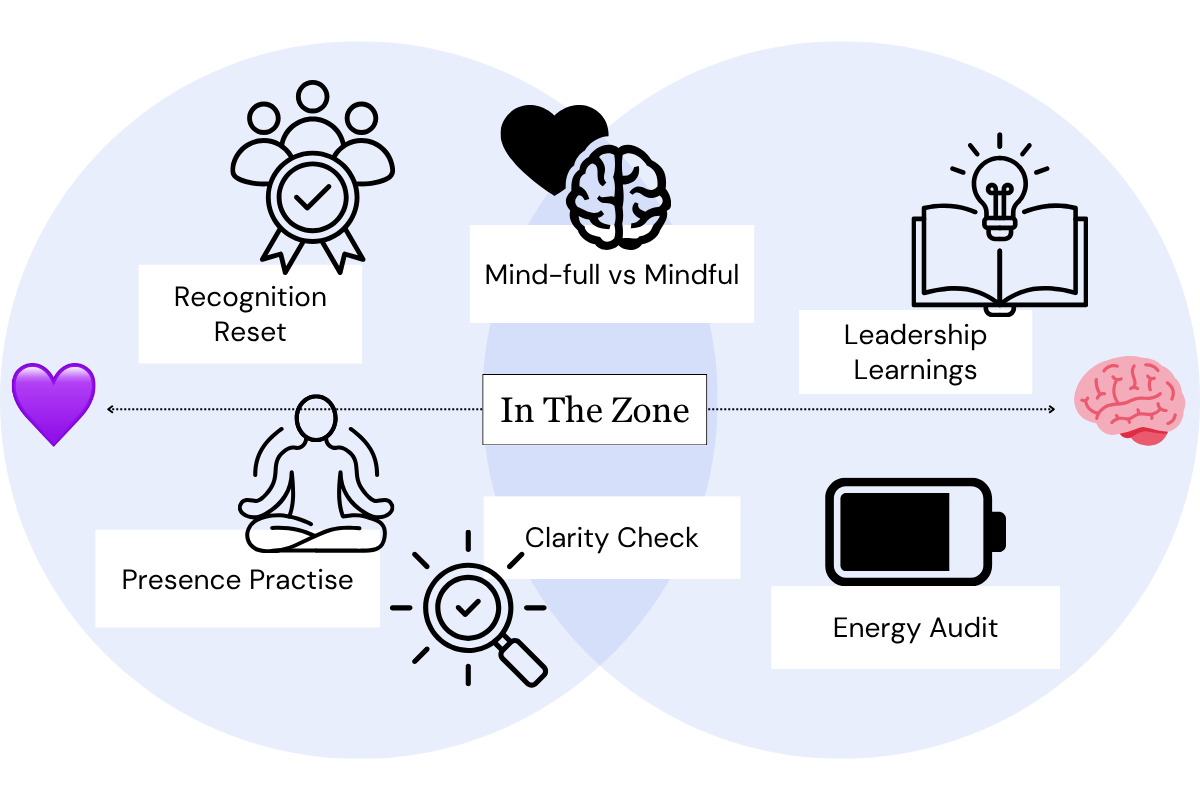
That's what being in The Zone Global is really about. Getting yourself in The Zone, helping others get into The Zone, and spending more time there together.
So, is Your Culture Good Enough for Your People?
The most emotionally intelligent people in your organization aren't fragile. They may actually be your early warning system. They're often the people who can tell you where the cracks are appearing before the cracks become structural.
Listen to them. Don't make them carry it, and don't ask them to become more resilient simply because you're unwilling to change the environment. The better question is whether your leadership is creating the conditions where good people can do great work without having to spend half their energy managing the dysfunction around them.
That's the work, and it starts with leadership. At The Zone, our Executive Coaching and Leadership Development work is about helping leaders and organizations get honest about what is really happening, understand what's getting in the way, and make the changes that create better performance, stronger relationships, and healthier cultures.
Because you don't transform a culture by putting better words on the wall. You transform it by changing what happens in the room, and that starts with the people leading it.
The question is: What are your people experiencing from you that you haven't yet seen?
Resources and References
American Psychological Association – Toxic Workplaces: Research and guidance on the impact of toxic workplace environments, employee well-being, stress, and psychological safety.
https://www.apa.org/topics/healthy-workplaces/toxic-workplace.html
American Psychological Association – Work in America: Research examining workplace stress, psychological safety, and employee experiences in modern work environments.
https://www.apa.org/pubs/reports/work-in-america
The Leadership Quarterly – A Systematic Review of Executive Coaching Outcomes: A systematic review examining research into Executive Coaching and its potential outcomes for leaders and organizations.
https://www.sciencedirect.com/science/article/pii/S1048984317301431
Oxford University Research Archive – Executive Coaching Outcomes: Research relating to Executive Coaching outcomes and leadership development.
https://ora.ox.ac.uk/objects/uuid%3A8548836a-13af-4f3c-bac9-91e02bb4baf0
PLOS ONE – Coaching as a Developmental Intervention in Organizations: A systematic review examining executive, leadership, and business coaching within organizational settings.
https://journals.plos.org/plosone/article?id=10.1371/journal.pone.0159137
The Zone Global – Liam Forde: Learn more about Liam Forde and his approach to leadership, Executive Coaching, and Leadership Development.
https://www.thezoneglobal.com/people/liam-forde
The Zone Global – Leadership Development: Learn more about The Zone's approach to Leadership Development and developing leaders who can create high performance alongside strong relationships and culture.
https://www.thezoneglobal.com/services/leadership-development
Next Post
.png)
.png)

























.jpeg)


.png)


Let's work together
Our diverse global team can help you reimagine the future of your teams, leaders and organization. Get in touch.
Book your free 15-minute Clarity Call
Identify your key challenges
Explore tailored solution options
Show you how The Zone can accelerate your success
Take the first step toward real progress—schedule your call today.


